Blog / Article
Choosing the Ideal IoT Partner for Fleet Dash Camera Connectivity
Connected fleet dash cameras are crucial for modern fleet management. They offer valuable insights for safety managers and fleet operators, helping reduce insurance claims costs and monitor driver behaviour. Let’s explore what connected fleet dash cams are and how they benefit business and fleet operations. What Are Connected Fleet Dash Cameras? Connected fleet dash cams…
Connected fleet dash cameras are crucial for modern fleet management. They offer valuable insights for safety managers and fleet operators, helping reduce insurance claims costs and monitor driver behaviour. Let’s explore what connected fleet dash cams are and how they benefit business and fleet operations.
What Are Connected Fleet Dash Cameras?
Connected fleet dash cams are advanced dashboard cameras designed to transmit footage and data over wireless or cellular networks. Unlike traditional dash cams that store recordings locally, connected dash cameras use internet connectivity for real-time streaming. They also have crucial features like instant event alerts and GPS tracking. These cameras provide features such as:
- Real-time Streaming: Transmitting video footage in real-time.
- Instant Alerts: Immediate notifications for events like accidents.
- GPS Tracking: Monitoring vehicle location in real-time.
- Artificial Intelligence: Analysing footage for safety hazards like distracted driving.
Key Things to Consider When Selecting an IoT Connectivity Partner
Choosing the right IoT connectivity partner is crucial for effective dash camera operations. You need to consider the following factors:
Is the Network Coverage Sufficient?
The most crucial factor to consider is whether the IoT partner offers robust connectivity with reliable live-streaming capabilities. The partner should support high-speed data access, providing benefits like improved fleet productivity and reliable driver monitoring. For example, Velos IoT’s solution covers major UK networks and seamlessly transitions between them, ensuring connectivity in areas with weak signals or even while travelling across borders. If your fleet is expected to travel across borders, then you’ll need a partner that offers global connectivity. Velos IoT can support your business with cross-border access to over 600 global operators. See our coverage.
Is Connectivity Management Comprehensive?
Besides that, Velos IoT’s Nomad Connectivity management platform allowed Compass to suspend the SIMs if they started to use too much data. If their customer has stayed logged in for a long period of time and reached a certain level of SIM usage, Nomad would send an email notification to alert Compass. Under
this circumstance, Compass could communicate with their customer and educate them not to constantly stay logged in to the system to avoid high costs.
Does It Safeguard Against Bill Shock?
One of the biggest worry for businesses with large fleets connected to the network is that it is difficult keeping track on the data session costs. These long data sessions can be very costly and thereby cause a shock. Mitigate the risk of “bill shock” by choosing a partner with safeguards in place. Choose a solution which includes a connectivity management platform with automated alerts and proactively monitoring usage. This reduces the risk of unexpectedly large bills and enables operational managers to stay on top of monthly costs in real-time.
Benefits of an Effective Fleet Dash Camera Connectivity Partner
A connected fleet dash camera solution means improved fleet management.
In the dynamic landscape of fleet management, the right time to invest in connected dash cameras depends on factors like safety concerns, insurance costs, and regulatory compliance. Installing connected fleet dash camera solutions is highly recommended across the industry to proactively address safety and operational challenges. When aligning with an IoT connectivity partner for your dash camera solution, the benefits extend beyond just functionality. A strategic partnership empowers your business with the following advantages:
- Reliable and Robust Connectivity: Ensure seamless communication and data transmission for uninterrupted operations.
- High-Speed Data Access: Experience swift and efficient data retrieval, contributing to enhanced overall fleet productivity.
- Efficient Fleet Monitoring: Access real-time camera footage and vehicle tracking, streamlining monitoring processes for optimal fleet management.
- Higher Levels of Driver Safety: Implement proactive measures to enhance driver safety, fostering a secure operational environment.
These benefits collectively enable your business not only to scale effectively but also to remain competitive.
Want to Integrate Fleet Dash Camera Solution with a Reliable Partner?
As the industry evolves, staying ahead with innovative solutions becomes a strategic imperative. But more than innovative solutions, choosing the right connectivity partner matters. Velos IoT can help your business maximise the value of the vehicle tracking dash cameras.
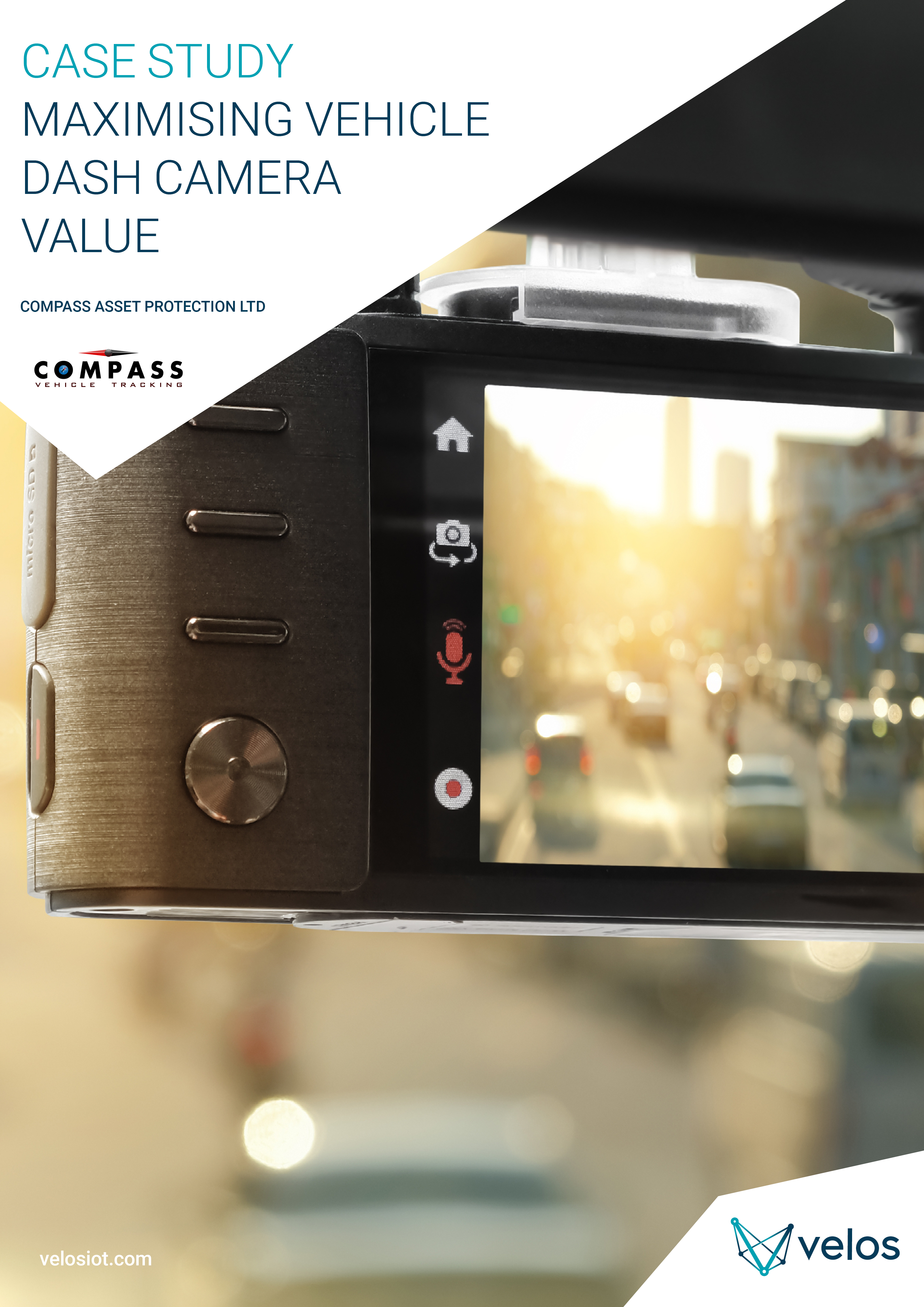
Would you like to learn more about Velos IoT‘s dash camera solution? Download our “Compass Dash Cam Case Study” and get to know why one of our clients chose us as an IoT connectivity partner.
If you would like to know more about our other IoT solutions, contact one of our IoT experts.
{{cta(‘8c88fe37-b125-4679-85dc-8a5f08f8f25f’)}}
Related Articles
With 20+ years of experience in delivering complex IoT services, we understand the importance of world-class connectivity and security. We enable businesses worldwide, including IoT connectivity providers, to build and manage their mission-critical devices.