Blog / Article

What are the benefits of a Fixed Private IP SIM card?
While ordinary mobile SIMs are built for one-way outbound data, an IoT SIM card with a Fixed IP opens up a continuous, two-way channel. This ensures your devices aren’t just sending data to the cloud, but are always reachable for real-time remote access, troubleshooting, and control. Static VS Dynamic IP for IoT An Internet Protocol (IP) address…
While ordinary mobile SIMs are built for one-way outbound data, an IoT SIM card with a Fixed IP opens up a continuous, two-way channel. This ensures your devices aren’t just sending data to the cloud, but are always reachable for real-time remote access, troubleshooting, and control.
Static VS Dynamic IP for IoT
An Internet Protocol (IP) address is the digital fingerprint of any device on the web, dictating exactly where data needs to go—whether you’re browsing a website or an M2M (Machine-to-Machine) device is checking in. In the IoT landscape, these addresses come in two flavors: dynamic and static. For enterprise deployments, the latter is almost always the gold standard. Here is why that distinction matters:
Dynamic IPs: The Moving Target
A dynamic IP address is temporary; it resets every time a device reboots or gets re-assigned by the network provider. While it is generally the cheaper, default option for everyday consumer devices, it introduces serious friction for IoT architectures. When you need to track, configure, or secure a fleet of smart devices, having their network coordinates constantly shifting is a logistical nightmare, to say the least.
Static IPs: Built for IoT Reliability
A static—or fixed—IP address never changes. Once provisioned by the provider, it remains tied to that specific SIM card for the entire lifecycle of the service. This rock-solid consistency is vital for IoT deployments where reliable, predictable data transfers are non-negotiable.
Beyond stability, a fixed IP serves as the foundational building block for advanced network architectures, allowing companies to spin up custom data access points, host servers, and deploy secure private networks. Ultimately, static IP SIM cards unlock the seamless remote access needed to truly scale an IoT ecosystem.
Public VS Private IP addresses
The IP address assigned to a device can be either public or private. When a device needs to connect directly across multiple internet hosts, it is assigned a public IP address, enabling global-scale connectivity.
However, the vast majority of IoT deployments rely on Fixed Private IP addresses. Because private IPs are defined by the customer and operate exclusively within the organization’s secure network, they provide a highly controlled, localized, and ultra-secure architecture.
At Velos IoT, we deeply understand the operational demands of IoT-enabled organizations, which is why we offer both public and private IP solutions tailored for any scale. Given that today’s enterprises predominantly require Fixed Private IP infrastructure, here is a look at how our solution works:
Exploring Velos IoT’s Fixed Private IP Options
When it comes to securing your cellular deployments, Velos IoT offers two distinct architectural models for Fixed Private IP SIM cards, depending on how much control you need over your network routing.
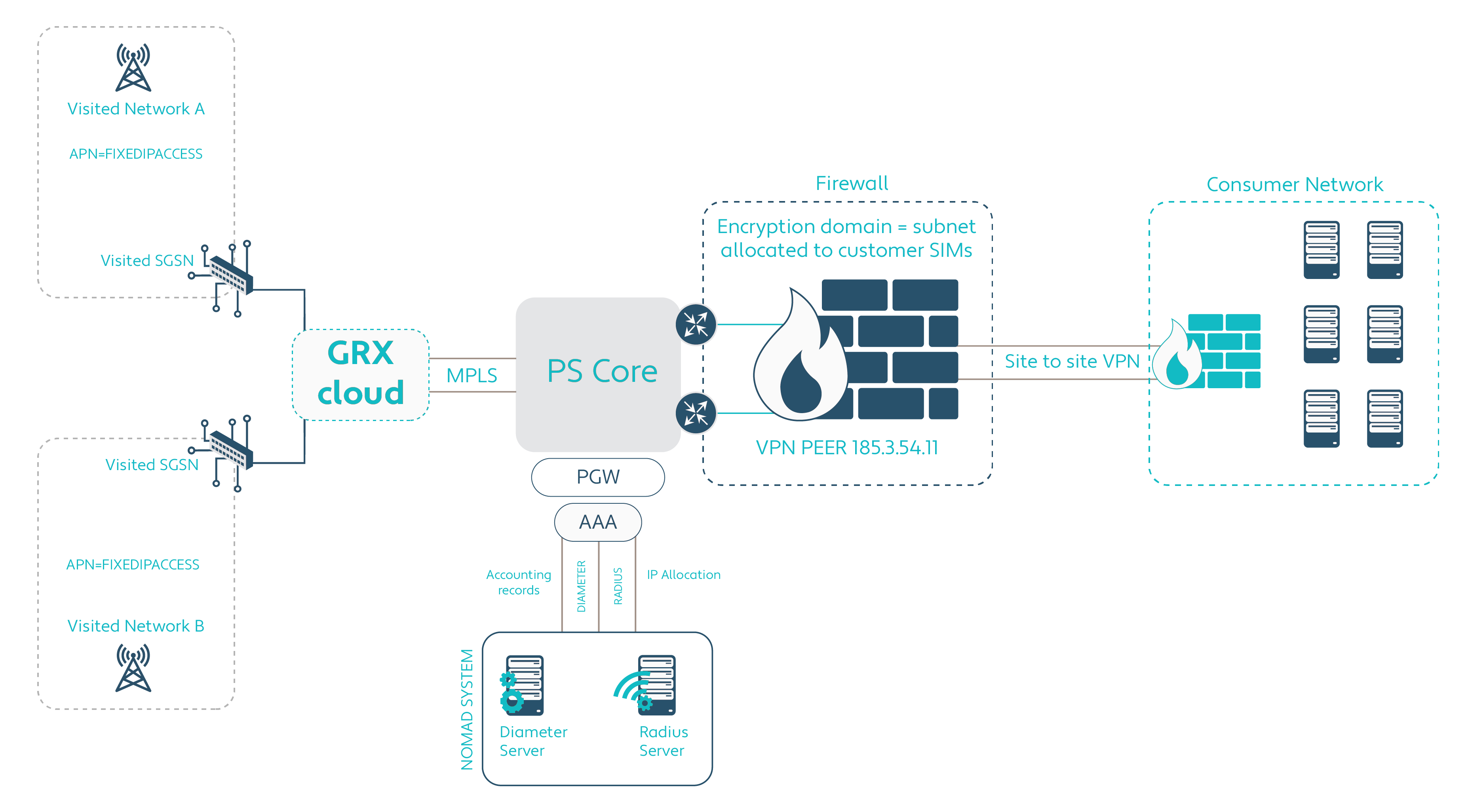
Fixed Private IP Standard Model
The Standard Model delivers maximum security by keeping your devices entirely off the public internet. These SIM cards are provisioned with fixed private IP addresses out of the box. To get connected, you simply configure the secure Velos IoT Access Point Name (APN) on your device.
Because these IPs are private, routing data to and from your devices requires an encrypted Virtual Private Network (VPN) tunnel established between your corporate network and the Velos IoT core network. Your routers and endpoints only become accessible once this secure VPN handshake is complete, creating a robust shield against external cyber threats.
Fixed Private IP Custom Model
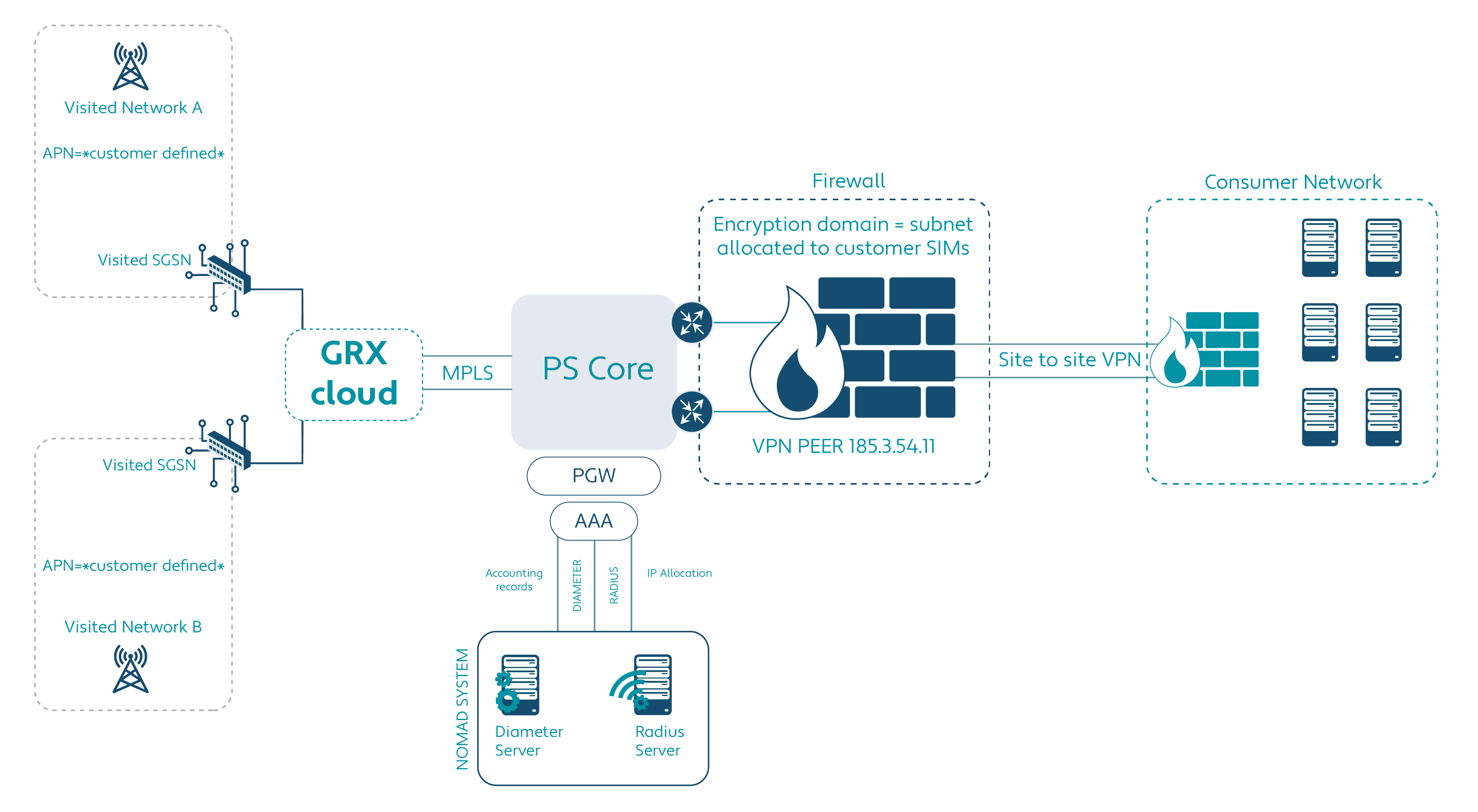
The Custom Model utilizes the same underlying secure VPN infrastructure as the Standard Model, but hands the keys over to your network team. Instead of using default configurations, your IoT devices utilize a customer-defined APN and a custom IP addressing scheme that aligns perfectly with your existing internal network architecture.
Once configured, your remote hardware securely connects to your corporate infrastructure. Because the IP addresses mapped to the Velos IoT SIMs are integrated directly into your own network topology, your team can seamlessly access and manage remote endpoints from any authorized internal location.
Fixed Private IP SIM Applications
Many business-critical IoT applications rely heavily on Fixed Private IP SIM cards to ensure resilient communication and secure remote management. Here are some of the key use cases driving the demand for fixed IP architecture today:
- IP CCTV cameras
- Vending machines
- Asset management
- Tracking devices
- Mobile POS
- Smart meters
- Fleet management systems
- Digital signage
- Remote media
- Site-to-site 4G connections
- Secure remote management
- Wind turbines
- Wireless internet mobile workforces
What Makes Velos IoT Fixed IP SIMs Different?
The Velos IoT Fixed IP SIM utilizes non-steered, open-roaming technology. Once our secure APN is configured on your IoT device, the SIM automatically connects to the strongest available network without bias.
Velos IoT provides fast, secure, and reliable global cellular connectivity to power your enterprise deployments. With a single partner, you can instantly connect your IoT hardware to more than 700 mobile networks across over 200 countries and territories, ensuring consistent global coverage.
Furthermore, Velos IoT SIMs are designed to operate natively, without additional software layers to slow down or intercept connections. We allow free hopping between all available networks within a country—whether you are utilizing a dynamic IP, a fixed IP, or an IPsec VPN.
Key Benefits of Velos IoT SIMs:
- Superior Global Coverage: Non-steered, open-roaming data SIMs ensure your devices always connect to the strongest network.
- Unified Global Footprint: A single SIM card connects to over 700 direct roaming partners, streamlining global logistics and wireless management.
- Advanced Platform Control: The Nomad Connectivity Management Platform (CMP) offers real-time SIM network management alongside deep network control and visibility.
- Minimized Downtime: Faster fault detection allows your operations team to respond quickly and efficiently to network anomalies.
- Secure Two-Way Connectivity: Enable Static IPs on your roaming SIMs coupled with an IPsec VPN for ultra-secure, bidirectional communication.
- Flexible Architecture: Fixed Public IP SIM options allow you to securely connect and access remote IoT devices from anywhere without requiring a traditional VPN client.
Ready to secure your global deployment?
Discover how Velos IoT’s Fixed IP SIMs and non-steered connectivity can power your local and international projects. Contact us to speak with an expert.
FAQs
Key questions regarding private fixed IP SIM cards
A Fixed Private IP SIM card is an IoT SIM with a static private IP address that does not change over time. This allows devices to maintain reliable two-way communication across a secure private network, which is especially important for remote management, monitoring, and business-critical IoT applications.
The main benefits are consistent remote access, stronger security, and more reliable device communication. Because the IP address remains the same, devices are easier to reach, manage, and monitor at scale. For enterprises running connected fleets, that stability is no longer optional when uptime and control are business-critical.
A dynamic IP address can change when a device reconnects or reboots, which creates an operational bottleneck for remote access and troubleshooting. A fixed IP remains constant, making it better suited to IoT environments where devices need to be monitored, configured, and accessed over long deployment lifecycles.
Yes, provided the connectivity model is designed for multi-network resilience. For global fleets, a Fixed Private IP SIM becomes more valuable when paired with open-roaming, carrier-grade scale, and strong coverage across multiple countries. That combination helps maintain secure access without sacrificing flexibility or uptime as deployments expand.
Businesses should look for secure APN options, VPN support, reliable global connectivity, open-roaming capability, and visibility into device activity through a connectivity management platform. The real value is not just the IP type itself, but whether the provider can support resilient, secure, and future-proof IoT operations at scale.
Related Articles
With 20+ years of experience in delivering complex IoT services, we understand the importance of world-class connectivity and security. We enable businesses worldwide, including IoT connectivity providers, to build and manage their mission-critical devices.