


Blog / Article

Private vs Public Fixed IP IoT SIM
IoT devices generally use fixed IP addresses for the greater security, visibility and control they provide. The choice for the supplier remains between private fixed IP or public fixed IP options, depending on the business needs. Fixed VS Dynamic IP addresses Most IoT SIM cards – the ‘tags’ that enable a device to connect and…
IoT devices generally use fixed IP addresses for the greater security, visibility and control they provide. The choice for the supplier remains between private fixed IP or public fixed IP options, depending on the business needs.
Fixed VS Dynamic IP addresses
Most IoT SIM cards – the ‘tags’ that enable a device to connect and transmit data – use static IPs, also known as fixed IP addresses. Static or fixed IPs do not change, which allows devices to establish two-way communication with the servers and transmit data. Fixed IPs provide a permanent address for the device, directly correlating to better security and control over a device your server is already familiar with.
Dynamic IPs change depending on what is currently available in your IP pool. Having IoT devices with automatically assigned IPs may be a cheaper option. Still, it would require the device to re-establish a connection with the server whenever its IP changes. Many IoT devices work with dynamic IPs, but more complex and mission-critical devices would need to be addressed regularly without having to add new IPs into the system constantly.
Public vs. private fixed IP addresses
While most IoT devices are enabled with a fixed IP, the choice remains between opting for a public fixed or private fixed internet protocol for the IoT SIM.
Public Fixed IP SIM card
Choosing a public fixed IP address allows the IoT device to connect to the company server from any internet host. The option is used for global-scale projects, where the device needs to establish two-way communication from various locations and internet providers while retaining the same IP address so the system can recognise which device is connecting. Fixed public IPs are generally harder to manage than fixed private IPs due to the increased security requirements, and not many providers offer this option.
With a fixed public IP, the customer doesn’t have to use a VPN to connect to the server; instead, the customer uses a default APN that allows it to reach the core.
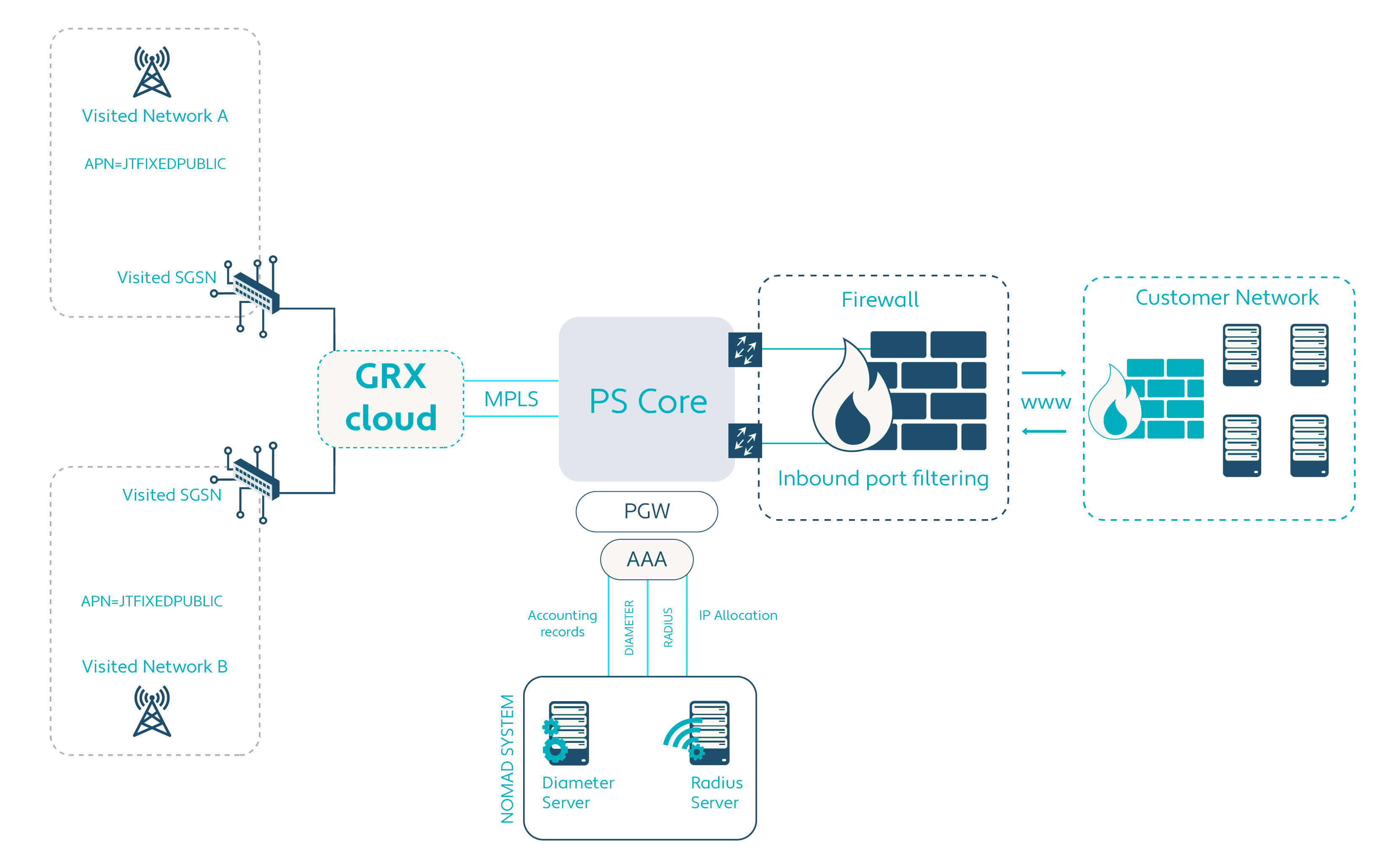
The difference between a public fixed IP IoT SIM and a regular public IP SIM is that the network provider assigns a standard public IP directly over the Internet and is accessible by all. Public IPs are visible to all Internet users, fairly easy to discover and therefore more susceptible to attacks. To securely use an IoT SIM with a public IP, the business must rely either on hardware authentication or a connection like the one above, configured by a service provider that can monitor the sessions.
Private Fixed IP SIM card
Private fixed IPs do not change over time and are valid only within a predefined network. Private IP addresses come from several predefined subsets, leaving the rest of the world’s IPs for public use. Private IPs do not send traffic to the Internet but allow the establishment of home networks.
Devices configured with a private fixed IP need to use an APN to establish a secure connection to the core network. Depending on the business needs, the APN can be defined by the supplier or the customer. This type of integration provides excellent security and end-to-end data encryption, and it requires a VPN to connect to the core.
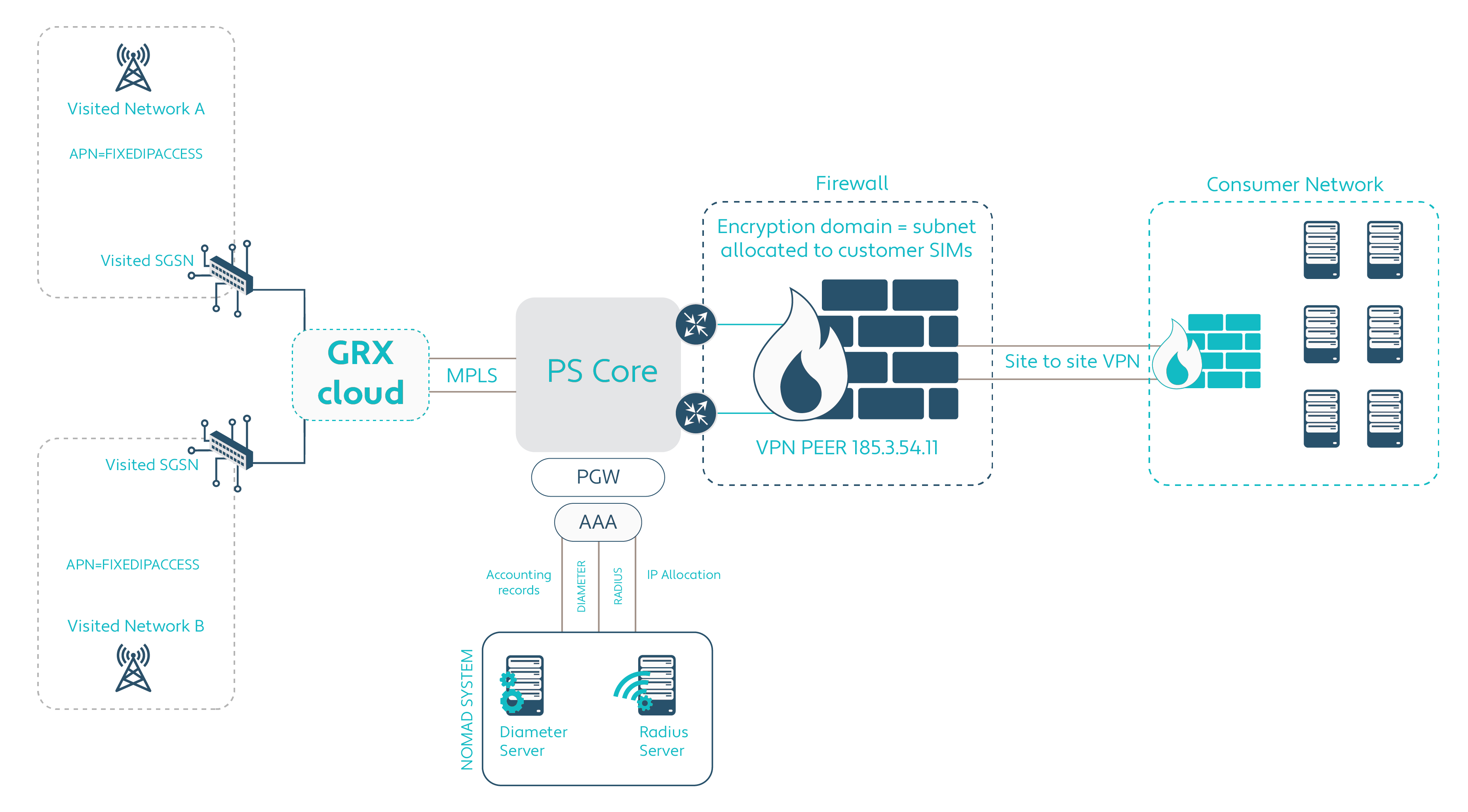
You can read more on fixed private IPs in our extended article here.
Download a copy of the Velos IoT Integration Models to learn more about
How different Velos IoT integration models work.
Related Articles
With 20+ years of experience in delivering complex IoT services, we understand the importance of world-class connectivity and security. We enable businesses worldwide, including IoT connectivity providers, to build and manage their mission-critical devices.


